Friday, January 21, 2011

RR03: Heskett CH. 4-6


This weeks reading focused on objects, communications and environments. The book mentioned, “Diversity in how objects are conceived, designed, perceived, and used also provides multiple perspectives from which they can be understood and interpreted”. I think this is true because when new objects are created, people do not usually know how to use them right away. However, once you do know, it is easy to understand why it was created in the first place. People often take objects for granted, but when the object isn’t present, they remember how useful it was.
The book also explains how some objects do not need instructions, such as Lego building blocks. However when design is 2D, it is important that the right message is sent across. If people do not know what you are trying to convey, then what is the point? I thought this was interesting because it seems like it would be really hard to come up with something that everyone understands, through a picture or set of words.
Finally, the book speaks about the importance of environments and how things are designed specifically for certain environments. The book states, “A further important distinction is that environments are frameworks for activities, significantly affecting patterns of use, behavior, and expectations in home life, work, leisure, and a range of commercial venture”. I think environment is an important factor that designers need to look at before creating something.  People are affected by their environment, which affects how objects need to work and function in order to be successful in making the consumer happy.

Thursday, January 20, 2011

CR03: The Design Process

This week's lecture was very informative. I think the Research step will be interesting because you will be able to look at things that other people created, and see what you can do to fix it or make it better. Plus you get to see what people are really looking for in a product. Like we discussed in earlier weeks make the product or space functional first and then make it look good. I also think the Design Cycle is fascinating because you'll start off with a bunch of random ideas on scrap paper and in the end, after Production, one of those crazy ideas will be right in front of you. When I look at it that way, it makes me want to create something NOW just so that I can see it in a 3D form. Oh and I can't forget about the Evaluation part of it all. I think it will be nerve racking having to wait to hear if your product is successful. If it is, then it will be awesome hearing people describe the usefulness of it,  then it will have been worth the nerves.

Tuesday, January 18, 2011

J02: Patterns

These are the patterns I saw this past week...

While I was waiting for my English class in Denny Hall to start 
I was looking at the wall. 
I love the color, but it reminds me of grade school.
1/14/11
This is an orange basket I have on my bookshelf.
I thought it looked cool.
1/15/11
This is a fruit basket.
I like the rustic look of it.
1/15/11

I went to the grocery store and they had a bunch of flowers 
so I got some for my mom. 
I absolutely LOVE flowers. No lie. 
1/14/11
This is the lamp in my living room. 
The crackling look is sweet
especially when it picks up a bunch of different colors. 
1/16/11


This is a paper towel.
Would you have guessed? 
I think it looks like a quilt, which I guess is the whole point.
1/15/11

This is a place mat. I love the woven pattern in it. 
How do they do it?
1/16/11
This is a frame on my bedroom wall. 
I love the tiny roses on it. 1/15/11
This is my scarf. 
The pattern is simple, which I like.
I wish I could learn how to knit.
1/12/11
This is a vase that sits on top of my bookshelf.
I love the bubbles that pop out at you.
They remind me of bubble wrap.
1/15/11

CR02: It Starts with a Chair

So even if classes seemed twice as long this week, I was really interested in learning about designers I knew nothing about. I think it is important to know at least something about the people who made an impact in the industry you are pursuing. I also liked hearing a bit more about other design majors closely related to industrial design. After all I will most likely be working with a few different types of designers at some point in my career.
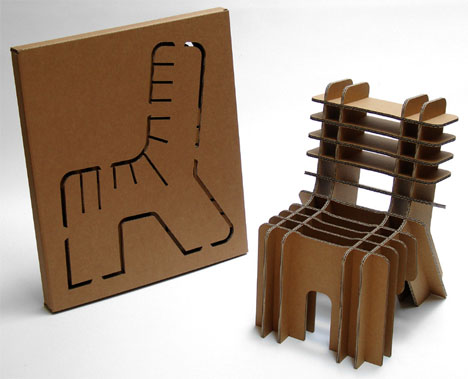
My absolute favorite part about the lecture was when we began talking about chairs. I love looking at furniture. It amazes me what people can come up with. I took a physics class my senior year of high school and we had to create a chair using only cardboard, glue and tape. It was my favorite part of the class (seeing as science is one of my least favorite subjects next to math...ugh). Anyway, I built a chair that was based off of this photo. -->
I wish I had a picture of mine but I don't. I'm sure I will be given the opportunity to build another chair as I journey through the industrial design major. And I will be sure to take a picture of it.

Speaking of taking pictures of chairs, this is the chair in my bedroom. I don't know the name of it or who designed it, but I still think it's pretty sweet.

Monday, January 17, 2011

RR02: Heskett CH. 1-3

Design: A Very Short Introduction begins by explaining what design actually is. I think everyone has their own interpretation for what design is because there are so many elements in design. The sentence “It [design] affects everyone in every detail of every aspect of what they do throughout each day” caught my eye when I first read it because it is so true. If you think about it, everything you see looks the way it does because it has been designed that way for a specific reason. No matter where you look or what you use you will be influenced by design.
I enjoyed reading about the different types of toothpicks that the book mentioned. I guess I never really thought about what a toothpick should look like, or how it should work. The first toothpick shown was created by the dental company “Jordan” (which is my brother’s name by the way!). The shape is flat, which I think is strange because I have only seen round toothpicks. The second toothpick shown is a traditional Japanese toothpick, which is round with a pointy end. The other end has grooves cut out, which make it easy to break off. It is inappropriate to lay chopsticks down on the table in the Japanese culture. Because of this they have little stands that hold their chopsticks up from the table. They thought the same should go for toothpicks. By breaking off the end of the toothpick you can lay it under the pointed end so that it does not touch the table. I have to admit, I have seen these types of toothpicks before and I had no idea there was so much thought behind the design of it. I honestly thought the grooves were just to look good or to stand out from all of the other plain toothpicks. I love learning interesting tid bits like this!